Why there's mistrust of the CDC, FDA, and the NIH.
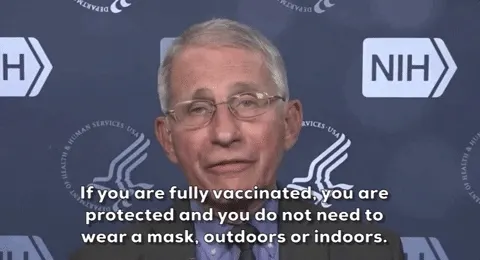
This is an article I recently wrote for Substack.
- Masks were first discouraged, then mandated.
- Surface transmission was emphasized, then downplayed.
- School closures were recommended, then reversed.
- Six‑foot distancing was presented as settled science, then later admitted being based on outdated droplet research.
- CDC guidance appeared to shift depending on political pressure.
- FDA decisions (e.g., vaccine approvals, booster timing) seemed influenced by the White House.
- NIH messaging on lab‑leak theory appeared coordinated with political narratives.
Science was subordinated to politics.
The “noble lie” problem
Fauci acknowledged early mask guidance was partly influenced by concerns about PPE shortages.To me, this was catastrophic.- It suggested officials were willing to withhold or distort information “for the public good.”
- It reinforced the belief that bureaucrats think citizens cannot handle the truth.
If officials lied once, they might lie again.
Lab‑leak controversy and perceived suppression of debate
I point to.- Early dismissal of lab‑leak theory as “conspiracy.”
- Emails showing scientists privately considered lab‑leak plausible while publicly downplaying it.
- NIH funding of EcoHealth Alliance and gain‑of‑function research.
The agencies protected institutional reputations rather than pursuing all scientific possibilities.
Inconsistent messaging on natural immunity.
Many doctors frequently argue.- Natural immunity was downplayed or ignored.
- Vaccine policy did not account for prior infection.
- NIH did not fund large‑scale natural‑immunity studies despite billions in research capacity.
The agencies prioritized a single narrative (vaccination) over comprehensive science.
Regulatory capture concerns (FDA).
What’s often highlighted.- FDA’s close relationship with pharmaceutical companies.
- Revolving‑door employment between regulators and industry.
- Emergency authorizations that appeared rushed or politically timed.
The FDA is too intertwined with industry to be fully objective.
Public‑facing communication that felt dismissive or authoritarian
What’s often cited.- Fauci’s strong statements that framed dissent as dangerous.
- CDC messaging that implied moral judgment rather than scientific uncertainty.
- NIH leadership appearing to “lecture” rather than inform.
The agencies treated the public as subjects, not partners.
Transparency issues.
Many point to.- Missing or redacted emails.
- Slow FOIA responses.
- Conflicting statements in congressional testimony.
- Lack of clarity on gain‑of‑function definitions.
The agencies were evasive when accountability was needed most.
Bottom Line.
Not trusting the CDC, FDA, NIH, and Fauci because I believe these institutions mixed science with politics, withheld information, dismissed legitimate debate, and communicated with unjustified certainty — then reversed themselves without accountability.My interpretation.
The agencies acted with unjustified certainty, then reversed course — eroding trust. Editing was done to clarify the article