Not your typical vocational school.
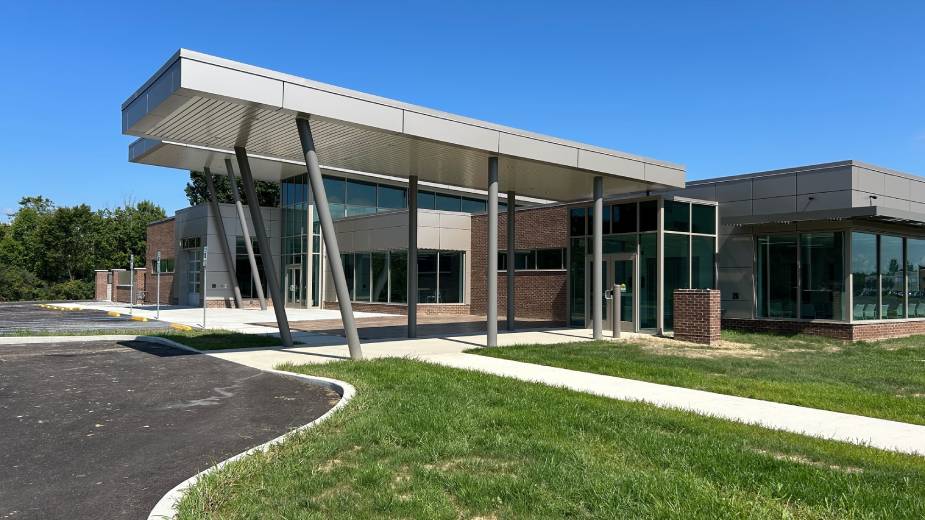
The new $7.5 million Medical Wellness and Education Center at the Mahoning County Career & Technical Center has opened its doors, initiating an innovative public/private partnership that stands to deliver important benefits to the community for years to come, officials said Friday. The new facility incorporates three elements that are tied to a $5 million grant awarded to the project through the Appalachian Community Innovation Centers program, said John Zehentbauer, MCCTC superintendent.
“One is that we had to build a school-based clinic,” Zehentbauer said. A second provision was that MCCTC had to partner with an existing health provider to operate the clinic – in this case, Mercy Health – and open it to the community. “The third piece is that we had to offer adult programming of some sort,” he said.
In addition, Cadence Care Network will offer professional mental health counseling and behavioral health services, addressing the growing need for mental wellness support among students and families, he said.Zehentbauer and other MCCTC officials hosted U.S. Rep. David Joyce, R-14th, for a tour of the new health clinic and MCCTC’s Leadership Employment Advancement Discovery Center on Friday. The LEAD Center incorporates industrial robotics and automation; computer networking and cybersecurity; AI systems and software development; heating, ventilation and air conditioning; and welding education programs under a single roof.
The center officially opened Aug. 18. Under the state’s newly redrawn congressional district map, Joyce will now represent an area of Mahoning County that consists of Canfield and Austintown townships. His district also covers all of Trumbull and Ashtabula counties to the north.
Health and Education Center Opens to the Community
“Classes are starting here this week,” said Mary Mihalopoulos, director of MCCTC’s adult career center. The education and training programs that are now open include EMT and paramedic courses, and a practical nursing program will operate during the day beginning next week. “Those will all be running here,” she said, adding that the center is exploring short-term programs for continuing education training for those in the field, and expanding adult education opportunities to include a registered nursing program. She also noted that MCCTC students could benefit from learning from working practitioners in the medical profession. “We could work collaboratively with high school students, exposing them to explore careers in the medical field,” she said.
Ground was broken in late April 2025 on the $7.5 million, 13,000-square-foot project, she said. A ribbon-cutting ceremony is scheduled for Sept. 18. The project aims to provide comprehensive medical and mental health services through strategic partnerships with Mercy Health and Cadence Care Network. Mercy Health will staff the facility with on-site health care professionals to provide primary and preventive care for students and community members. Mercy Health plans to start operations at the site next week, Mihalopoulos said. Among the amenities are examination rooms and a large workforce training area – one side devoted to nursing and the other to EMT and paramedic courses. The space includes a replica of a Mercy Health patient room, while a hi-fidelity mannequin simulator is expected soon. The other benefit is that the clinic is able to provide services for students who are able to stay on campus for treatment, said Andy Frost, assistant director of adult education and public safety coordinator.
“Our students will have the ability to come here during the day and get care,” he said. “Our goal is to get the students back in class, keep the parents at work and then for the community to use it as well.” The new clinic acts as a primary care facility with a full lab. It does not provide X-ray services. Similar programs initiated across Ohio have resulted in lower student absentee rates, Frost said.
“The numbers are incredible,” he said. “It’s great for the families, and we’re also bringing care to students who may not have access to that care.”
LEAD Center Takes Shape
MCCTC representatives also led a tour of the new LEAD Center, a $16 million building that encourages collaboration between different automation and technology programs and courses, Zehentbauer said.
“It’s a lot to try and figure out how everything fits together,” said Matt Peters, technical integrator at MCCTC.
“The idea is potentially all these groups that would not work together, now maybe they are. In industry, they will be working together somehow.”
The new space also expands these programs, enabling MCCTC to enroll another 100 students, Zehentbauer said.